A young child planting herbs and flowers in a Trelush Sussex slatted wooden planter in a sunny garden
★★★★★ Buying guide · planters for growing food

6 things to check before you buy a planter to grow your own veg

You chose wood because it felt like the natural thing to grow food in. Then you read the small print and found the catch: treat it against rot and you worry about chemicals in the soil, line it with plastic and you worry about that instead. You don't actually have to choose between rot and a clean harvest, but you do have to know what to check.

I build wooden planters for a living, and the people who write to me most worried are the ones growing food. They didn't want a chemical box for their herbs and salads, so they chose wood, and then they hit the trap every edible grower hits. One gardener put it perfectly: "it sounds like basically I'm screwed either way, either get toxins from whatever the wood is sprayed with or toxins from whatever I line the wood with."

It isn't a mystery, and you're not screwed. The failures are specific and checkable. Run through these six before you spend a penny, and you'll spot a planter that's safe to grow food in and built to last from one that taints the soil, drowns the roots, or falls apart by the second winter. After years building outdoor timber in our Kent workshop, here are the six things that decide it.

★★★★★  Rated 5/5 by 72 owners of the Sussex

Bought, planted, loved.

★★★★★

"Great, sturdy and beautiful. Perfect for my children to help plant their first flowers."

Piper · verified owner
★★★★★

"Great quality, seem pretty sturdy, assembled a big bonus. Arrived sooner than expected."

Lynn J · verified owner
★★★★★

"Brilliant planter, great value for money. Very solid, highly recommend."

Deane Smith · verified owner
The verdict, before you spend a penny

The Sussex vs a typical cheap planter

Everything the six checks come down to, side by side. Then we'll walk each one in detail.

The Sussex
Passes all six checks
  • Timbac, non-toxic, safe around edibles, pets & kids from day one
  • Arrives already lined the right way, nothing to cut or staple
  • Drains through its slatted base by design, nothing to drill
  • Raised slatted base keeps the timber clear of the wet
  • Right depth for herbs, salads, strawberries & patio veg
  • Arrives fully assembled from our Kent workshop, 2-yr guarantee
Typical cheap planter
Where they fall down
  • Tanalised or pressure-treated, a toxin worry either way
  • Line it yourself with plastic, swapping one worry for another
  • Gravel "drainage" that raises the water table and drowns roots
  • Flat base sits in trapped water and rots from the bottom
  • Sold on look, not depth, wrong tool for your crop
  • Flat-pack, sealant to buy, a marketplace listing, no maker to ask
1The treatment

Check what the wood's actually treated with, before you grow a thing in it

The verdict

This is the one that matters most if you're growing food. Tanalised and pressure-treated wood worry edible growers for good reason; Timbac is non-toxic and safe around herbs, salads, pets and children from day one.

Safe to plant herbs you'll eat, straight away. Timbac is non-toxic, with no waiting and no lining.

If you're growing anything you'll eat, start here, because it's the worry that keeps people up at night. You chose wood because it felt natural, and now you're not sure what's been sprayed on it. As one gardener asked, plainly, "is it safe to grow an edible plant in it? It doesn't say what the wood has been treated with." Another had already worked out the trap: "either get toxins from whatever the wood is sprayed with or toxins from whatever I line the wood with."

And the treatment isn't always subtle. A reviewer of a cheap import warned: "what they treat it with really stinks, so leave it outside when built to get rid of the smell." If you can smell it, it's coming off the wood and into the air around your plants.

So check what it's actually treated with, and whether it's safe for soil and edibles from the day it arrives. The Sussex is treated with Timbac, our own non-toxic, water-and-wax treatment. It is not tanalised and not pressure-treated, which are the things people worry about leaching into food. It's safe around edibles, pets, soil and children from day one, with nothing to air off. If you grow anything you'll eat, this is the check that decides it.

The Sussex

  • Timbac, non-toxic water-and-wax
  • Safe for edibles, pets, kids & soil from day one
  • Not tanalised, not pressure-treated
  • No smell to air off

Typical cheap planter

  • Tanalised or pressure-treated
  • "Really stinks" off the wood
  • Chemicals can leach into the soil
  • A toxin worry either way
2The lining

Check whether you'll have to line it yourself, and what that lining does

The verdict

Lining a planter with plastic to dodge the treatment just swaps one worry for another. The Sussex arrives already lined the right way, so there's nothing to cut, staple or replace.

A child planting herbs straight into the lined, ready Sussex planter in a sunny garden
Lined and ready at the workshop, you just plant straight in.

Most people's answer to the treatment worry is to line the inside with plastic. It feels safe until you think it through. One gardener who'd chosen wood "because I wanted something natural" admitted, "I'm not 100% sure I want the plant to now be contaminated with microplastics." You picked wood to avoid plastic round your food, and the standard fix puts plastic right back.

It doesn't even last. As another gardener found, a cheap membrane "will degrade within two years. The fabric will then fall to bits and get mixed in with your compost." So you do the fiddly job of cutting and stapling a liner, and two years later you're picking shreds of it out of the soil your veg is growing in.

So check whether the planter comes lined, and lined properly. The Sussex arrives with the liner already fitted at the workshop, the right liner for the job, so water drains where it should and the timber stays protected, with nothing for you to cut, staple or replace down the line.

Growing food and want one you can trust?

Check the sizes and see if the Sussex fits your spot.

See the sizes
3The drainage

Check how it drains, or your roots quietly drown

The verdict

The old trick of tipping gravel in the bottom drowns roots instead of draining them. The Sussex drains through its slatted base by design, so there's nothing to drill.

Diagram showing how water drains through the slatted base of the Sussex planter rather than pooling around the roots

How a slatted base lets water leave, instead of a gravel layer trapping it.

Drainage is where good intentions go wrong. Everyone arrives at the same question, "do I need to put some holes in the bottom to allow for drainage… how many and what size?", and then reaches for the old trick of chucking a layer of gravel or rocks in the bottom. Don't. It does the opposite of what you'd think. As the gardening experts put it, "adding rocks to the bottom of a planter raises the water table, leaving roots in soggy soil and increasing the risk of root rot." Your "drainage layer" becomes a paddling pool.

And waterlogged roots are quietly fatal. As the RHS puts it, "plant roots literally drown." They can't breathe in saturated soil, and the plant goes from healthy to dead without ever looking thirsty, which is heartbreaking when it's a crop you've grown from seed.

So check that drainage is designed in, not left as a DIY job for you. On the Sussex, the slatted base and the built-in liner work together: water drains away through the base instead of pooling, and the roots don't sit in standing water. Nothing to drill, no gravel myth to fall for. You plant it, you water it, and the water knows where to go.

4The base

Check where the base sits, because that's where it rots first

The verdict

A flat base sits in trapped water and rots from the bottom; the Sussex's raised slatted base keeps the timber clear of the wet, backed by a 2-year no-exclusions guarantee.

The rotted, bowed bottom boards of a cheap flat-based wooden planter that sat in trapped water

The classic failure: bottom boards that sat wet, day and night, with nowhere for the water to go.

If you've owned a wooden planter that rotted, look at where it went first. It's almost never the top. It's the bottom, the boards in contact with the ground. One gardener put it plainly: "the first bottom boards are now rotting and have become bowed where they have detached from the supports." That's the classic failure, and on a planter full of damp compost it happens fast.

Here's the part nobody selling cheap planters will tell you. Wood doesn't rot because it's wood. It rots because the base sits in trapped water, day and night, with nowhere for the wet to go. As the experienced lot on the gardening forums say, "wood in contact with soil will rot really quickly." So the question isn't "is it wood?" It's "does the base ever get to dry out?"

Side view of the Sussex planter showing the raised slatted base that lets air and water pass underneath

The Sussex sits on a raised slatted base, air and water pass underneath, so the bottom never sits wet.

That's why the Sussex sits on a slatted raised base, built in. Water and air pass underneath, so the bottom never sits wet. Nothing to prop on bricks, no pot feet to buy. And it's backed by our 2-year guarantee with no exclusions, which covers anti-rot as well as manufacturing defects. Check this one closely, because it's the single thing that decides whether your planter sees more than a winter or two.

5Size & depth

Check it's the right size and depth for what you actually grow

The verdict

Match the planter to the crop. The Sussex is brilliant for herbs, salads, leafy greens, strawberries and patio veg; if you're after deep maincrop carrots or potatoes, you want a deeper bed, and I'll say so.

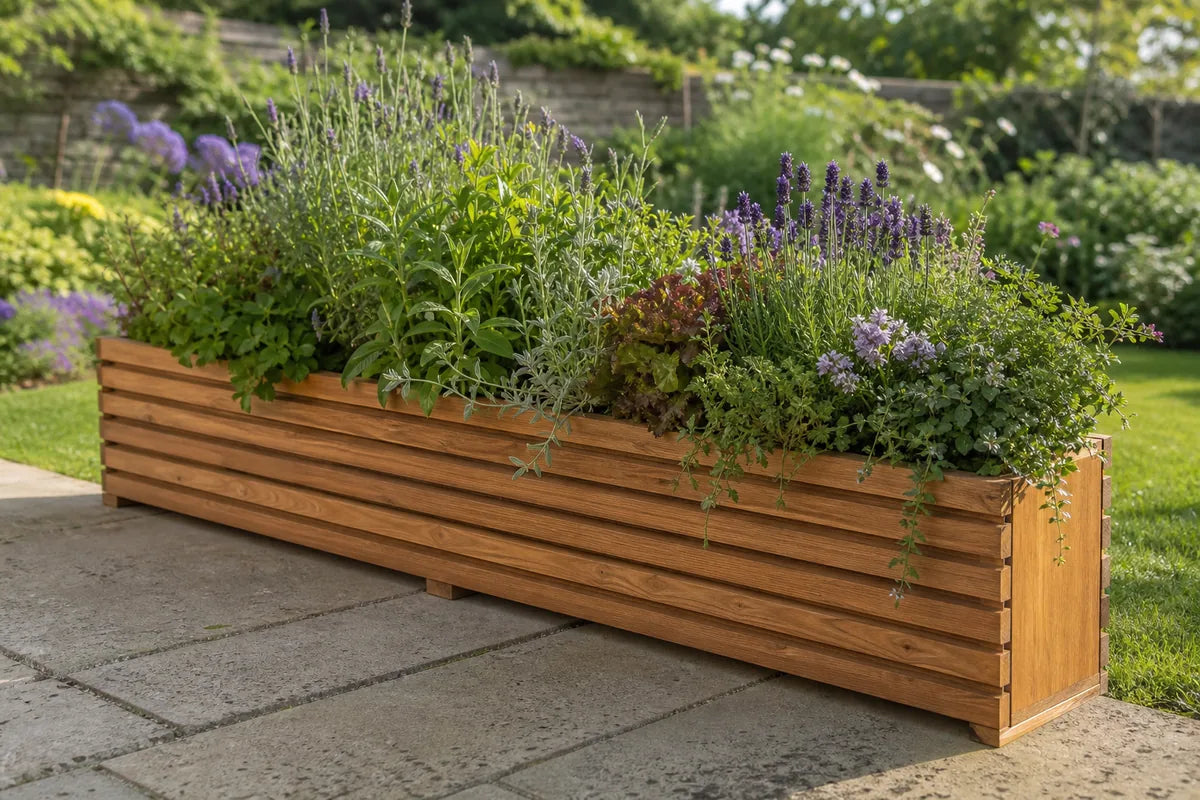
The Sussex planter running along a stone garden path, planted with herbs and lavender
Along a path
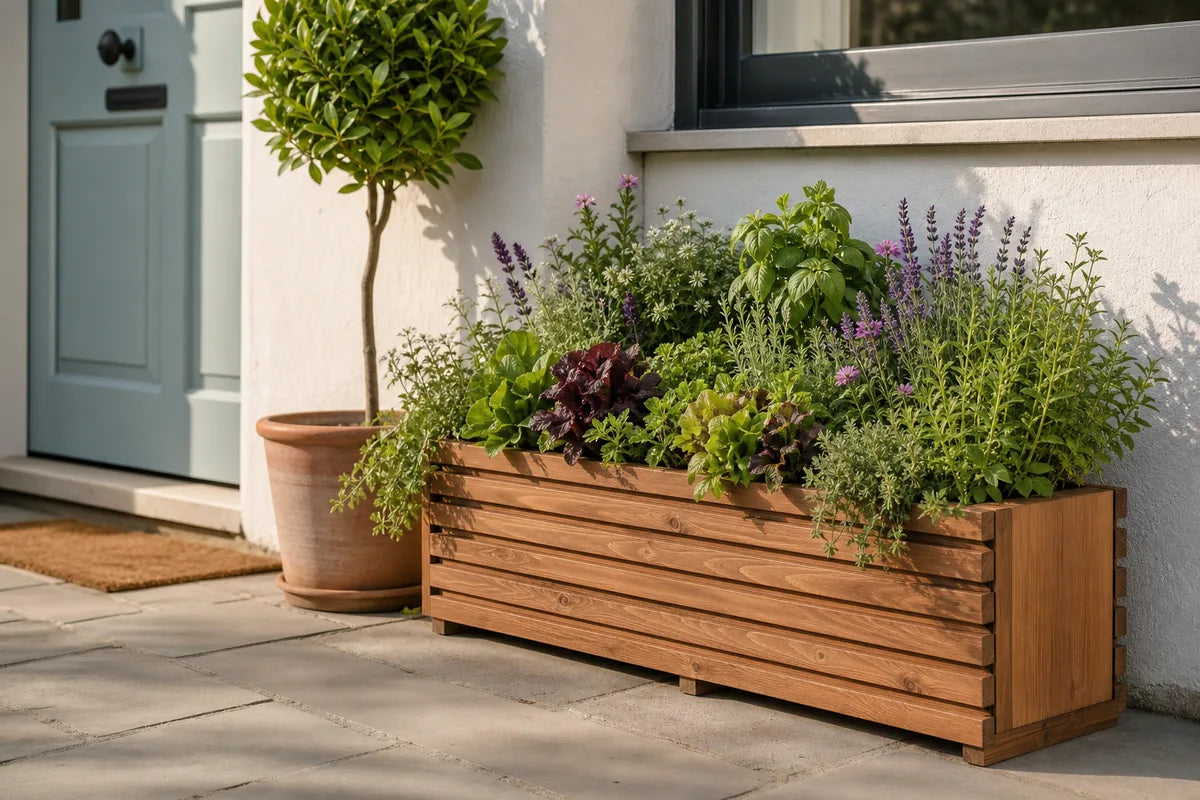
The Sussex planter against a house wall beside a back door, planted with herbs
Against a wall
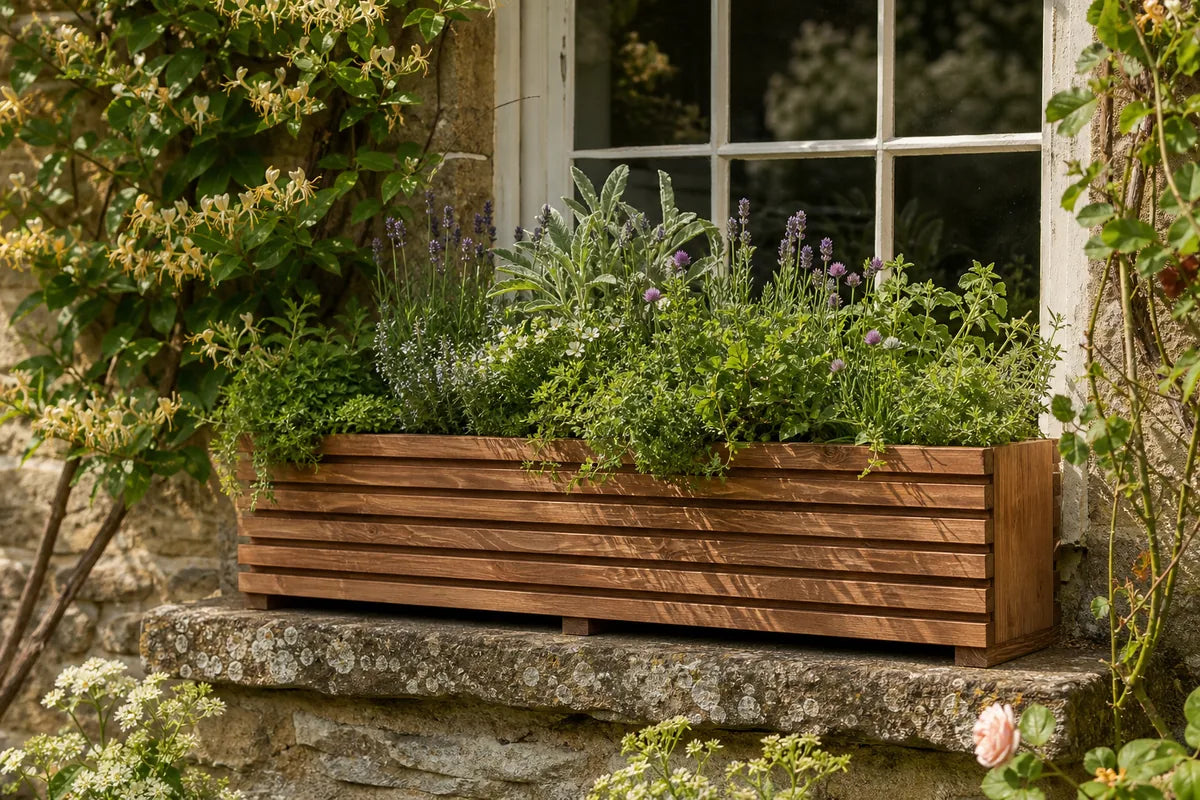
The Sussex planter beneath a cottage window, planted with herbs and flowers
Under a window
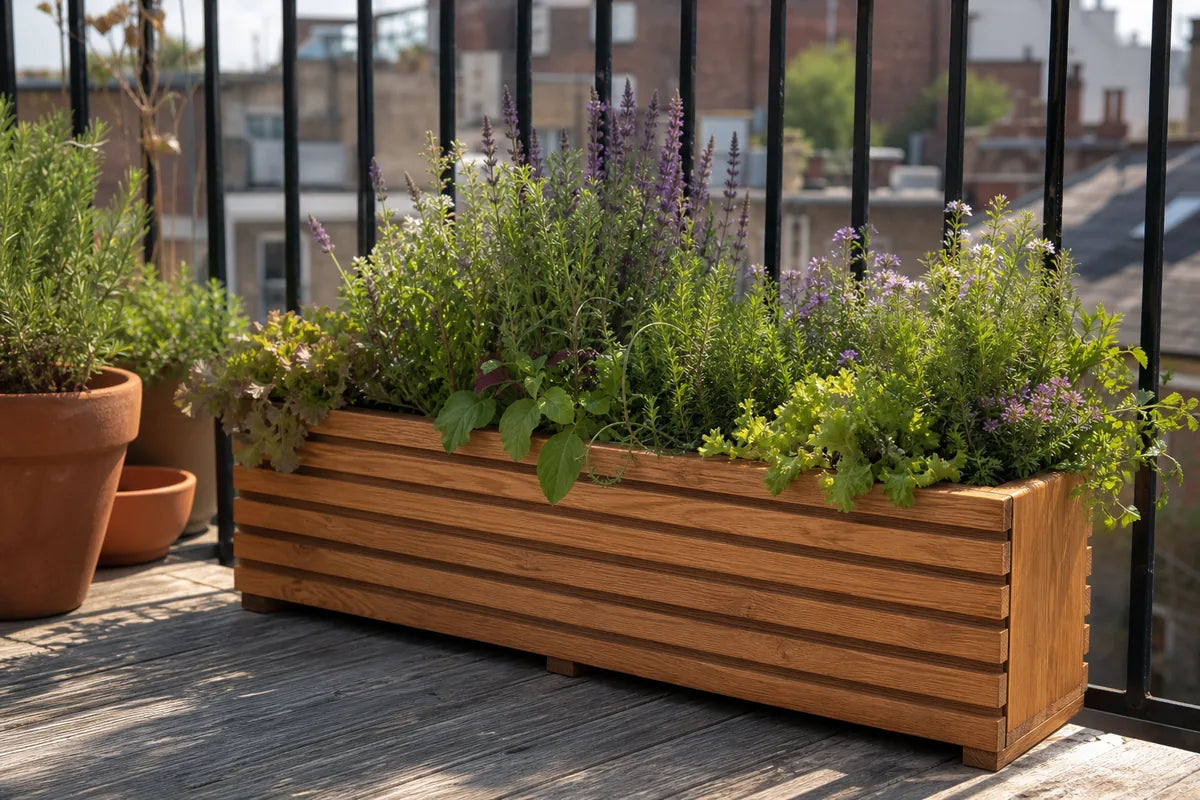
The Sussex planter on a balcony with railings, planted, city rooftops behind
On a balcony

Around 219mm deep, in 2ft, 3ft and 4ft lengths, sized for the patio kitchen garden.

Here I'll be straight with you, even though it might cost me the sale. The Sussex is a raised trough planter, around 219mm deep, in 2ft, 3ft and 4ft lengths. That depth is ideal for the things most people grow on a patio or small plot: herbs, salads and cut-and-come-again leaves, strawberries, spring onions, bush and patio tomatoes, chillies, dwarf beans. Line a path or edge a bed with two or three and you've got a proper little kitchen garden in a weekend. As one owner did: "bought 3 x 3ft planters to edge the patio off. Perfect sizing."

And the honest bit: what it isn't is a deep raised bed for maincrop root veg. If your heart's set on long carrots, parsnips or maincrop potatoes, they want more root room than any trough this depth will give them, and you'd be happier with a tall bed. I'd rather tell you that now than have you disappointed in August.

So check the depth against your crop, not just the look. For the herbs-salads-and-patio-veg most people actually grow, the Sussex is exactly the right tool. For a deep root crop, it isn't, and now you know.

6Ready to plant

Check whether it turns up ready, and who you can hold to it

The verdict

A good planter shouldn't be a weekend project, and there should be a real maker on the guarantee. The Sussex arrives fully assembled from our Kent workshop, backed by a 2-year guarantee with our name on it.

A maker building wooden planters by hand in the Trelush workshop in Kent

Designed, built and dispatched from our own workshop in Kent, building wooden housing since 1982.

Read the one-star reviews of cheap planters and the complaints aren't really about the wood. They're about the work. "Product requires sealing before use. A bit fiddly to assemble. Had to buy a spray sealant before use," wrote one buyer. A flat-pack to build, a sealant to buy and apply, a liner to cut and fit, bricks to prop it on, none of which was in the price they thought they were paying. Then there's the other half of it: when the bottom boards rot, who exactly do you talk to? Behind a lot of planters there's no maker at all, just a marketplace listing and a brand name you can't find anywhere else.

So check what actually turns up, and who stands behind it. The Sussex arrives fully assembled, with Timbac already applied, the liner already fitted and the drainage built into the base. You lift it out of the box, set it down, add soil, and plant. As one owner put it: "excellent well made sturdy looks great came assembled." It's designed, built and dispatched from our own workshop in Kent, where the family has been building wooden housing since 1982, and we're a member of Made in Britain. You can find us, and you can hold us to the 2-year guarantee.

The Sussex

  • Arrives fully assembled, treated & lined
  • Drainage built into the base
  • Made & dispatched from our Kent workshop
  • 2-year no-exclusions guarantee

Typical cheap planter

  • Flat-pack to build
  • Sealant to buy & apply
  • Liner to cut & fit, bricks to prop on
  • A marketplace listing, no maker to ask
The planter built to pass all six

The Sussex Planter, built to pass all six checks

Built in Kent The 2ft tan Sussex planter, slatted timber sides on a raised base, planted and standing in a garden
★★★★★5/5 from 72 owners

The Sussex Wooden Planter

…built to pass all six checks.

3ft £39.99

Timbac-treated, lined and drained, arrives fully assembled. The 3ft and 4ft are there for longer runs along a wall or path.

Choose your set

The 5% / 10% set saving is applied automatically at checkout.

  • Free UK delivery on every order, no minimum spend, order before noon dispatches same day
  • Arrives fully assembled, treated & lined, plant from day one
  • 90-day free returns, including large items
  • 2-year no-exclusions guarantee (covers anti-rot)
★★★★★  72 reviews

72 gardens in, and the same things keep coming up

Look great, beautifully made, really great product. Excellent service. , verified owner
Feels very sturdy and it looks great. Customer service is great and they promptly responded. , Erne, verified owner
  • Safe to grow food in, Timbac, not tanalised, not pressure-treated.
  • Drains properly through its slatted base, no gravel myth, no drilling.
  • Built to last on a raised base that never sits wet.
  • Made by people you can find, in Kent, since 1982.

Safe to grow food in, drains properly, built to last, made by people you can find. That's the planter that passes all six checks.

The Sussex Planter, built to pass all six checks

If you've read this far, you already know what you're looking for. The Sussex is the planter I built to tick every box on this list. From £29.99 for the 2ft; the 3ft and 4ft are there for longer runs along a wall or path. One last thought: if you're edging a bed or lining a path, two or three in a row look far better than one on its own, and they all ship free.

See the sizes

Questions, answered straight

Is Timbac really safe for growing vegetables, herbs and salads?+

Yes. The Sussex is treated with Timbac, our own non-toxic, water-and-wax treatment. It is not tanalised and not pressure-treated, which are the things people worry about leaching into food. It's safe around edibles, pets, soil and children from the day it arrives, and the planter comes already lined, so you can plant your herbs, salads and tomatoes from day one.

What can I grow in it, and is it deep enough for vegetables?+

It's around 219mm deep, which is ideal for herbs, salads and leafy greens, strawberries, spring onions, chillies, and bush or patio tomatoes and beans. It's perfect for a patio kitchen garden. It is not a deep bed for maincrop carrots, parsnips or potatoes, which need more root depth, so if those are your main crop you'd want a taller raised bed.

Do I need to line it or add drainage holes myself?+

No to both. The liner is fitted at the workshop, and drainage is handled by the slatted base, so water drains away rather than pooling around the roots. There's nothing to cut, nothing to drill, and please don't add a layer of gravel or rocks. That raises the water table inside and leaves roots sitting wet, which is the opposite of what you want.

Will it rot if it sits on my patio or soil?+

Cheap planters rot at the base because the bottom sits in trapped water with no air underneath. The Sussex is built on a slatted raised base, so water and air pass beneath it and the bottom never sits wet. You don't need to prop it on bricks or buy pot feet. It's backed by our 2-year guarantee, which covers anti-rot as well as manufacturing defects.

Does it arrive assembled?+

It arrives fully assembled. There's no flat-pack to put together, no sealant to apply and no liner to fit. Timbac is already on, the liner's already in, and the drainage is built into the base. You lift it out of the box, set it where you want it, add soil and plant.

Delivery, returns and the guarantee?+

Delivery is free on every order, with no minimum spend, and orders before noon dispatch the same day, arriving within 2 to 3 working days. You get 90-day free returns, including large items, and a 2-year guarantee with no exclusions covering manufacturing defects and anti-rot.

The Sussex planter
The Sussex Planter From £29.99★★★★★ 72 owners · ships free
Add to basket