


To line a wooden planter, cut a breathable or waterproof liner to fit the inside, press it into the corners, staple it near the top rim, then make drainage holes so water can escape. That is the whole job. But the more useful question, and the one nobody seems to answer honestly, is whether you should line it at all.
Here is the part the plastic-sellers leave out. How to line a wooden planter matters far less than whether the wrong liner is quietly rotting your planter from the inside. A non-breathable liner with too few holes traps water against the timber and turns a good planter into a sealed bucket of wet soil. We make planters by hand in a Kent workshop, and we design the drainage in, so we will be straight with you about when a liner earns its place and when it just gets in the way.
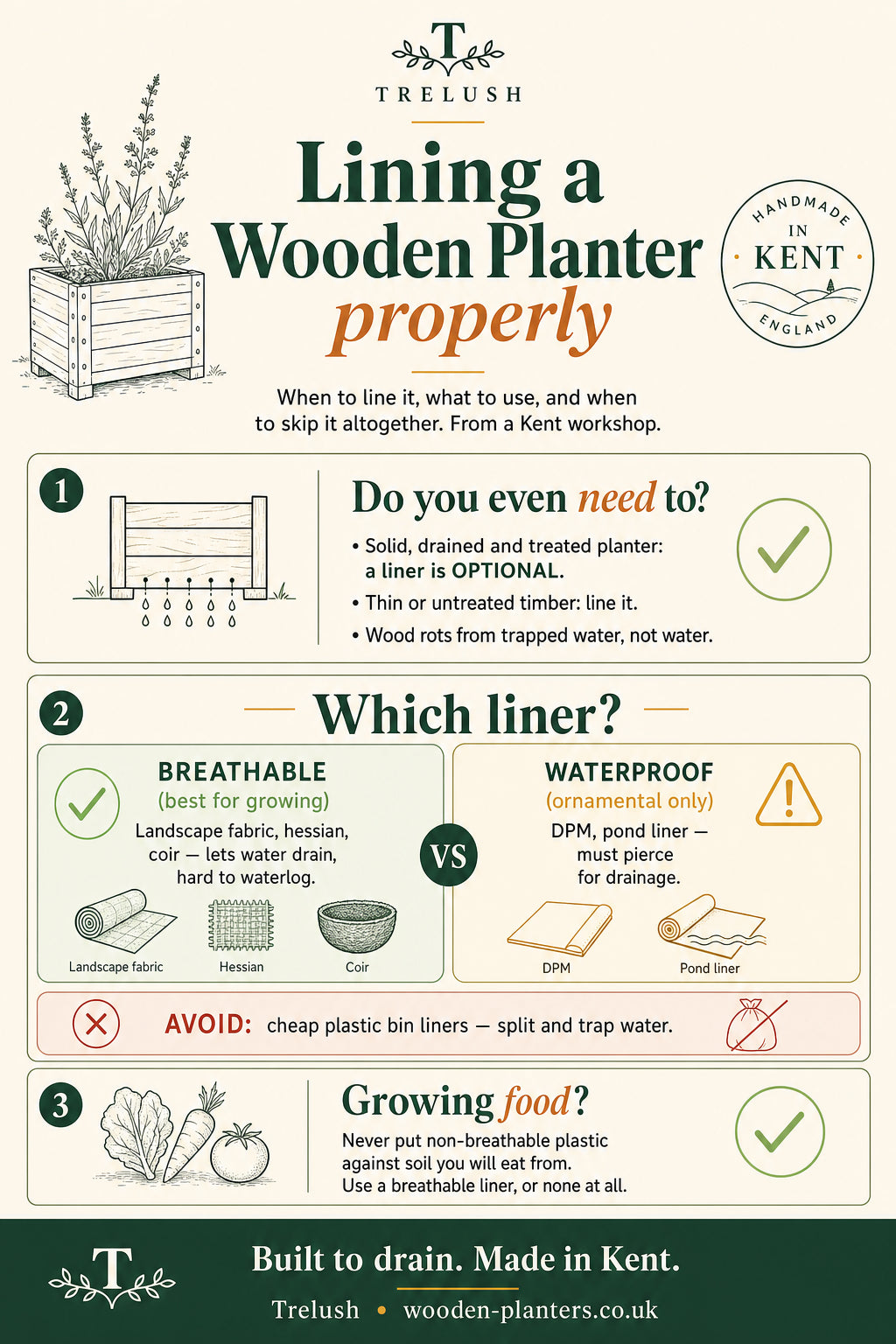
Do you actually need to line a wooden planter?
Sometimes. Not always. Wood does not rot because it gets wet. It rots because water sits against it and cannot escape, and a badly fitted liner makes that worse, not better.
A liner's real job is to slow the contact between damp soil and bare timber. That is worth having if the timber is thin, untreated, or you are keeping fine compost off a decorative face you want to stay clean. On an ornamental display planter that never sees a hosepipe, a neat liner keeps the inside tidy and the outside looking sharp.
But a planter that is built to drain and finished properly already handles the soil-to-timber problem. Our planters are solid timber, not veneer or chipboard, and they are treated with our own TIMBAC® water-and-wax finish rather than tanalised. The water beads and runs off, the base is built to let it go, and in that case a liner is optional. If you are choosing across our wooden planters, you are not buying a box that needs plastic wrap to survive its first winter.
So the honest answer to "do you need to line a wooden planter" is: line it if the planter is thin or untreated, or if you want a display planter kept pristine. Skip it if the planter is solid, drained and treated.
What to line a wooden planter with: breathable vs waterproof
The choice of what to line a wooden planter with comes down to one decision. Do you want the liner to let water through, or hold it back? Everything else follows from that.
Liners fall into two families. Breathable liners like landscape fabric, hessian and coir let water pass straight through, so the soil can drain and it is almost impossible to waterlog the planter. Waterproof liners like damp-proof membrane (DPM), pond liner and heavy plastic hold water in, which means you must pierce them yourself or you will drown the roots.
| Material | Breathable? | Best for | Watch-out |
|---|---|---|---|
| Landscape fabric | Yes | Growing, general use | Cheap grades tear when stapled |
| Hessian / coir | Yes | Herbs, salads, natural look | Breaks down over a few seasons |
| DPM (damp-proof membrane) | No | Ornamental display | Must pierce for drainage |
| Pond liner | No | Long-life waterproofing | Heavy, needs many holes |
| Plastic bin liner | No | Almost nothing | Traps water, splits, a false economy |
For anyone growing plants that need to drain, breathable wins nearly every time. The best liner for a wooden planter you actually garden in is a breathable one, because it forgives the over-watering that kills most container plants. Reach for a waterproof liner only when the planter is decorative and you want to keep the timber bone dry behind it.
Whatever you pick, skip the cheap plastic bin liner. It splits within a season, holds water where you least want it, and costs you a planter to save a pound.
Growing food? Don't put plastic against the soil
If you are growing herbs, salad or veg you will eat, the food-safe rule is simple. Do not put non-breathable plastic against the soil, and if in doubt, use a breathable liner or none at all.
Sealed plastic against growing soil traps heat and moisture and holds it there. It is not the surface you want around roots you will harvest from, and it works against the free-draining, airy soil that edibles prefer. A breathable, inert liner lets the soil behave like soil. Often the cleaner answer for food is no liner, planting straight into a planter you already trust.
That trust is the whole point of how our planters are finished. TIMBAC® is a non-toxic water-and-wax treatment, not a tanalised or pressure-treated timber, so it is safe for edibles, pets and soil from the day it arrives. You can plant herbs, salad and veg straight into a Trelush planter without a barrier between your food and the wood.
That is why our herb and vegetable planters do not need a plastic lining to be safe for the kitchen. Plant, water, harvest.
How to line a wooden planter, step by step
If you have decided a liner earns its place, here is how to line a wooden planter properly. The whole job takes about ten minutes and a staple gun.
- Measure the inside. Length, width and depth, then add roughly 5cm of overlap on every edge so you have material to fix at the top.
- Cut the liner to fit. Lay it flat and cut to your measurements. Better to leave it slightly large and trim than to cut short.
- Press it into the corners. Push the liner right down into the base and fold the corners neatly, like wrapping a parcel, so there are no gaps at the bottom where soil escapes.
- Staple near the top rim. Fix the liner every 10 to 15cm along the top edge, keeping it taut. Trim any liner that shows above the rim.
- Make the drainage holes. If your liner is waterproof, this step is not optional. Pierce holes through the liner directly over the planter's existing base gaps so water has somewhere to go.
Then skip the gravel. The old advice to put a layer of stones or broken crocks in the bottom "for drainage" does the opposite. A coarse layer under fine compost creates a perched water table, where water stubbornly pools above the stones instead of draining through, leaving roots sitting wet. A single square of landscape mesh laid over the drainage gaps does the real job. It stops compost washing out while letting water run free.
Fill with a good peat-free compost, firm it gently, and plant.
The mistake that rots planters faster: the mud-bucket
The fastest way to rot a wooden planter is to line it with waterproof plastic and forget the drainage holes. You have just built a mud-bucket. Water pours in, nothing drains out, and the soil turns to sour sludge.
A sealed liner holds standing water against the timber and around the roots. The roots suffocate and rot, the soil goes anaerobic, and the base of the planter, the very place planters die first, stays permanently wet against plastic. This is exactly why so many cheap lined planters fail inside two winters. The liner that was meant to protect them is what finishes them off.
We build against this from the base up. Our planters are made to drain, and the timber is finished to shed water rather than soak it up, so the base is handled before a liner is ever involved. That is the thinking behind our wooden trough planters and raised bed planters, where a long, low body means water has to move and a mud-bucket would be fatal. Get the drainage right and the liner becomes what it should be. A tidy detail, not a life-support machine.
FAQ
Do you need to line a wooden planter?
Not always. A liner slows contact between damp soil and bare timber, which helps if the wood is thin or untreated. A solid, well-drained planter finished with a water-repellent treatment handles that on its own, so lining is optional. If you use a waterproof liner, you must add drainage holes, or you will trap water and rot the timber faster.
What is best to line a wooden planter with?
For growing, a breathable liner such as landscape fabric, hessian or coir is best, because it lets water drain and is almost impossible to waterlog. For ornamental planters kept dry, a waterproof liner like DPM or pond liner works, but you must pierce it for drainage. Avoid cheap plastic bin liners, which split and trap water.
What do you put in the bottom of a wooden planter?
A single square of landscape mesh laid over the drainage gaps is all you need. It keeps compost from washing out while letting water run free. Skip the old gravel or broken-crocks layer. It creates a perched water table that pools water above the stones and leaves roots sitting wet, so it worsens drainage instead of helping.
Can you line a wooden planter for vegetables?
Yes, but choose a breathable, inert liner or use no liner at all. Non-breathable plastic against growing soil traps heat and moisture around roots you will eat from, which is not what edibles want. A breathable liner keeps the soil free-draining and airy. If your planter is treated with a non-toxic finish, you can plant food straight in without a barrier.
Do Trelush planters need lining?
No. Trelush planters are solid timber, built to drain, and finished with our own TIMBAC® non-toxic water-and-wax treatment, safe for edibles, pets and soil. They arrive fully assembled and carry a 2-year warranty with 90-day free returns. You can plant straight in, food included. A liner is optional if you want a display planter kept pristine, never a requirement to stop it rotting.