


Yes, wooden planters can rot, but not because they sit outdoors. They rot when water gets trapped against the timber and cannot escape, and almost every time it starts at the base. A well-made, well-drained planter can last many years. A thin flat-pack one can be soft in two winters.
So if you are searching for how to stop wooden planters rotting, the honest answer is not a shelf of sealants. Wood copes fine with weather. What kills it is standing water it can never dry out from. We build planters by hand in a Kent workshop and design against exactly this, so rather than sell you an annual maintenance habit, we will explain the real cause and give you the checklist that actually matters.
Why wooden planters rot (it is not the rain)
Wood rots when it stays wet, not when it gets wet. Timber that soaks in a shower and dries out again in the sun will last for years. Timber that never gets the chance to dry is the timber that goes soft, dark and crumbly.
Three things cause that trapped, permanent damp, and they are the reason planters fail:
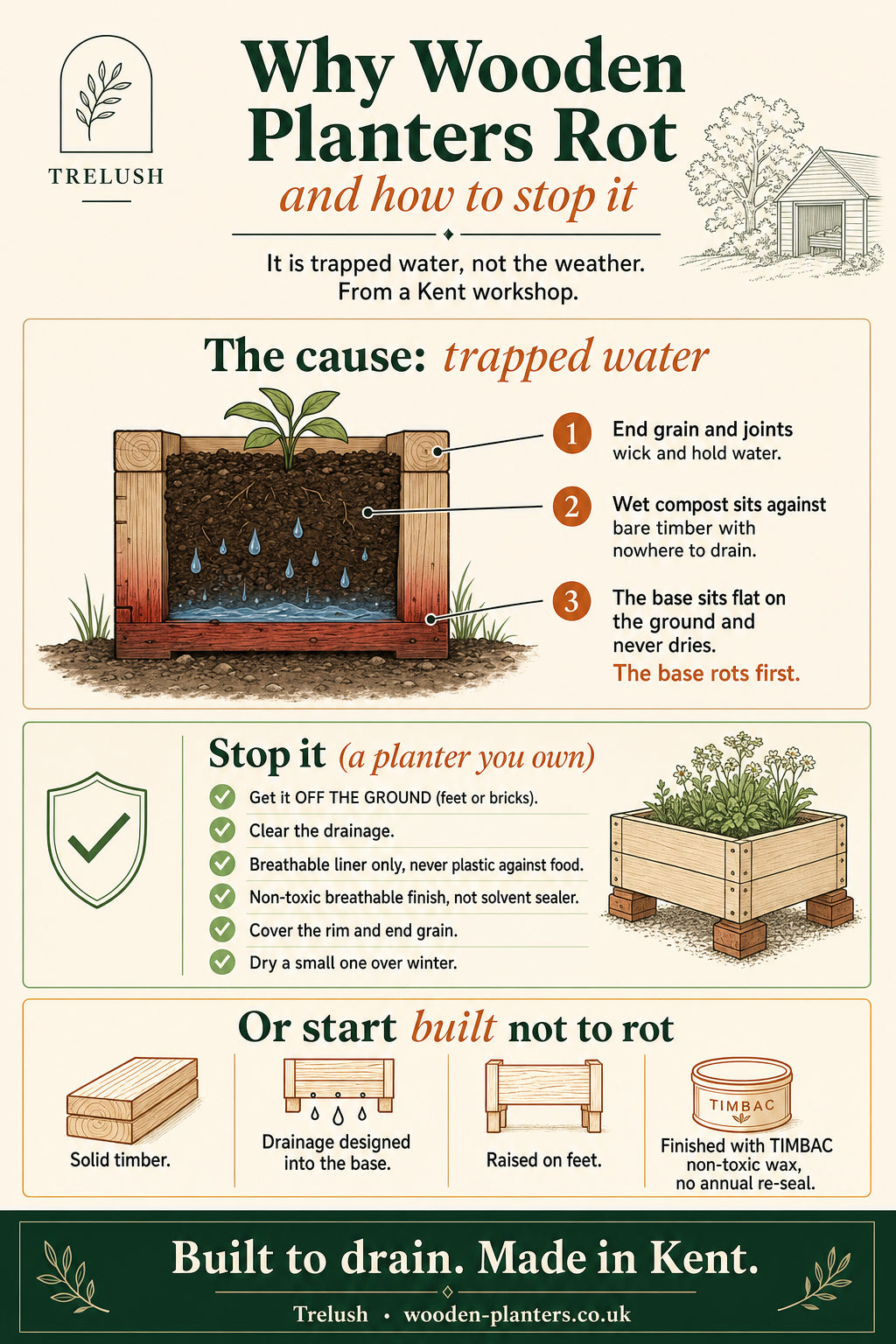
- End grain and joints wick and hold water. The cut ends of timber drink moisture like a straw, far faster than the flat faces. Water then sits in the corners and joints where two pieces meet, and those hidden pockets stay wet long after the outside looks dry.
- Fine wet compost presses against bare wood with nowhere to drain. Soil holds water against the timber all day. If that water cannot escape through the base, the inside face stays saturated for weeks.
- The planter sits flat on soil, grass or paving. With the base pressed to the ground, air never moves underneath it. The underside stays permanently damp, and a wet, airless base is where rot begins.
This is why a wooden planter rots at the bottom first, almost without exception. The base copes with the most water and gets the least chance to dry. Fix the base and you have solved most of the problem. Every step further down this page comes back to that one idea.
How long do wooden planters last?
There is no single number, and anyone who gives you one is guessing. A cheap, thin-timber flat-pack planter often lasts two to three winters before the base gives out. A solid, treated planter kept off the ground can last many years, realistically a decade or more with basic care.
Five things decide which end of that range you land on:
- Timber thickness. Thin boards rot through quickly. Solid, chunky timber has more wood to lose before it fails.
- Treatment. Bare, untreated softwood drinks water. A proper water-repellent finish makes it shed water instead.
- Drainage. A planter that lets water out lives. One that holds it rots from the inside.
- Ground contact. Raised off the ground, the base can dry. Sat flat on soil, it cannot.
- Climate. A shady, wet corner is harder on timber than an open, breezy spot.
Our planters are solid timber rather than veneer or chipboard, and they carry a 2-year warranty. Treat that warranty as a floor, not a ceiling. It is the period we stand behind in writing, not the day the planter is due to fail.
How to stop a wooden planter rotting (for one you already own)
If you already have a wooden planter, you do not need to buy anything to add years to it. You need to stop water sitting against the timber. Here is the checklist that actually works, in the order that matters most.
- Get it off the ground. This is the single biggest win. Stand the planter on feet, bricks or a couple of paving slabs so air can move under the base. Even a 2cm gap lets the underside dry between showers and breaks the constant damp that rots it from below.
- Sort the drainage. Check the base holes are clear and water actually runs out when you water. If it pools, you have a problem no sealant will fix. For the full breakdown of drainage and what to put in the bottom, see our guide on how to line a wooden planter.
- Line it right, if you line it at all. A liner can slow damp soil against thin timber, but only a breathable one, or a waterproof one you have pierced for drainage. Never seal non-breathable plastic against the soil, especially if you are growing food. That traps water and does the opposite of what you wanted.
- Treat it with the right finish. Use a non-toxic, breathable wood treatment that lets the timber dry, not a solvent sealer or a coat of liquid asphalt inside. A finish that beads water off the surface protects far better than one that seals moisture in.
- Cover the rim and end grain. These drink water fastest, so they are worth the most attention when you treat. Pay particular care to the top edges and any cut ends.
- Empty and dry a small planter over a hard winter. If it is portable and standing empty, tip it out, let it dry, and store it under cover or on its side. A winter spent full of sodden compost is a winter of rot you could have skipped.
Do the first two and you have handled most of the risk. The rest is fine-tuning.
The myths that make it worse
Most rot advice online is repeated without being tested, and some of it actively shortens a planter's life. Four myths are worth clearing up before you act on them.
- Gravel in the base "for drainage." A coarse layer under fine compost does not help water drain. It creates a perched water table, where water pools above the stones instead of running through, leaving roots and the base sitting wet. A single square of landscape mesh over the drainage holes does the real job.
- Sealing the inside with liquid asphalt or solvent products. This is common US advice, and it is wrong for anything you will eat from. Painting a tar-based or solvent coating inside a planter puts those chemicals right against your food soil. It also traps moisture in the timber rather than letting it breathe.
- Charring the wood to protect it. Shou Sugi Ban is a specific, controlled Japanese technique on particular timbers. Taking a blowtorch to a random softwood planter is not the same thing and will not reliably stop rot. Skip it.
- Cheap plastic lining with no drainage. Line a planter with a bin bag, forget the holes, and you have built a mud-bucket that holds standing water against the wood. It is one of the fastest ways to rot a planter, not save one.
The pattern across all four is the same. They either trap water or add chemistry you do not want near edibles, when the actual fix is drainage and airflow.
Or start with a planter built not to rot
Everything above is you doing the manufacturer's job. You can spend every spring re-sealing a cheap planter and standing it back on the wet ground it came off. Or you can start with one built to handle water from the day it arrives.
That is the difference we build in. Our planters are solid timber, not veneer or chipboard, so there is real wood there to last. The drainage is designed into the base rather than left for you to drill. They stand raised on feet, off the ground, so the base can dry. And they are finished with our own TIMBAC® water-and-wax treatment, non-toxic and breathable, rather than a solvent sealer you re-coat every year.
Because TIMBAC® is safe for edibles, pets and soil, you can plant herbs, salad and veg straight in with nothing between your food and the wood. No annual asphalt, no plastic wrap, no guessing. If you are choosing, start with our wooden planters, the long, low wooden trough planters, or the deeper raised bed planters for growing.
None of this makes a planter immortal. But it moves the work from you, every spring, to the workshop, once. That is the honest version of how to stop wooden planters rotting.
FAQ
Do wooden planters rot?
Yes, wooden planters can rot, but not simply from being outdoors. They rot when water gets trapped against the timber and cannot dry out, which almost always starts at the base. Thin, untreated flat-pack planters sat flat on the ground can go soft in two winters. A solid, treated planter raised on feet with good drainage can last many years.
How long do wooden planters last?
It depends on the timber and how it is looked after. A cheap thin-timber flat-pack planter often lasts two to three winters. A solid, treated, well-drained planter kept off the ground can last a decade or more with basic care. The main variables are timber thickness, treatment, drainage, ground contact and climate. Ours carry a 2-year warranty as a floor, not a ceiling.
What is the best thing to seal a wooden planter with?
Use a non-toxic, breathable wood treatment that beads water off the surface, not a solvent sealer or liquid asphalt inside the planter. Breathable finishes let the timber dry out, which is what prevents rot. Avoid tar-based or solvent coatings against food soil. Our planters use a TIMBAC® water-and-wax finish, safe for edibles, pets and soil, so no barrier is needed.
Can you stop wood rot once it has started?
Only partly. Active rot cannot be reversed, and badly rotted timber has to be replaced. If you catch it early, you can slow it by cutting off the source of trapped water: get the planter off the ground, clear the drainage, and let the timber dry out fully. Once it is dry, a breathable treatment helps. Soft, crumbling wood is already lost.
Should I line my wooden planter with plastic to stop it rotting?
Not with non-breathable plastic against the soil, and never if you are growing food. Sealed plastic traps water against the timber and around the roots, which rots the planter faster and is wrong near edibles. If you line at all, use a breathable liner, or a waterproof one you have pierced for drainage. Our full guide to lining a planter covers when to skip it entirely.
Do Trelush planters need sealing every year?
No. Trelush planters are finished with our own TIMBAC® water-and-wax treatment, which sheds water without an annual re-coat. It is non-toxic and breathable, so it is safe for edibles, pets and soil from the day the planter arrives. Combined with drainage built into the base and feet that keep it off the ground, the planter is built to handle water rather than needing you to re-seal it each spring.